

What was the rank structure in the Indian Armed Forces?
It was not until World War I that Indians became eligible for King’s commissions – see Did any Indians receive commissions and serve as officers? so the following table applies to the majority of Indian troops.
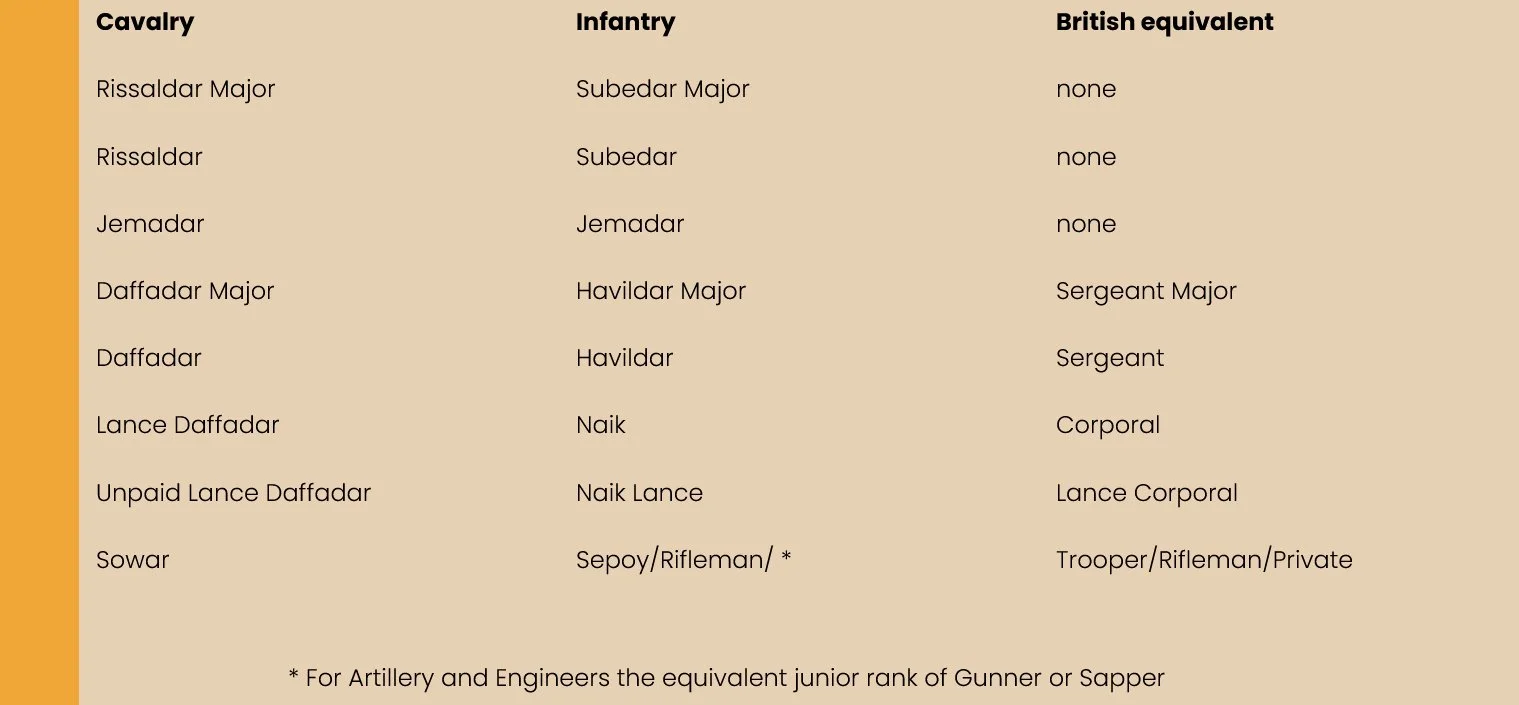
* For Artillery and Engineers the equivalent junior rank of Gunner or Sapper
Cavalry
Rissaldar Major
Rissaldar
Jemadar
Daffadar Major
Daffadar
Lance Daffadar
Unpaid Lance Daffadar
Sowar
Infantry
Subedar Major
Subedar
Jemadar
Havildar Major
Havildar
Naik
Naik Lance
Sepoy/Rifleman/ *
British equivalent
none
none
none
Sergeant Major
Sergeant
Corporal
Lance Corporal
Trooper/Rifleman/Private
Naval and Air Force ranks largely reflected those of the British Royal Navy and Royal Air Force, though in the Air Force the most junior rank, that of Aircraftman, was also known as Hawai Siphais (Sepoy of the Air)
Click to share this page to your social media


